Can't see the region you're looking for? You can find a list of our global locations here
Awaab’s Law is changing the way social landlords respond to damp and mould, introducing clear timescales for investigating hazards and making homes safe.
Phase 1, introduced in October 2025, requires social landlords to investigate significant damp and mould hazards within set timescales and carry out the work needed to make the home safe. Where further work is needed to stop the problem from recurring, landlords must also take steps to address the underlying issue.
But while Awaab’s Law is focused on how quickly landlords need to respond, the new Decent Homes Standard could have a wider influence on how homes are maintained and specified in the first place.
The new standard, which landlords will be expected to meet from 2035, puts greater focus on preventing damp and mould. Criterion E states that “a home should be free of damp and mould”, with landlords expected not only to address problems when they’re reported, but to take a proactive approach to prevention.
Together, these requirements create an opportunity to think beyond the cycle of complaint, clean, repair and repeat.
Cleaning mould or replacing grout can address the immediate problem, but if underlying issues such as poor ventilation, leaks or condensation remain, mould can return.
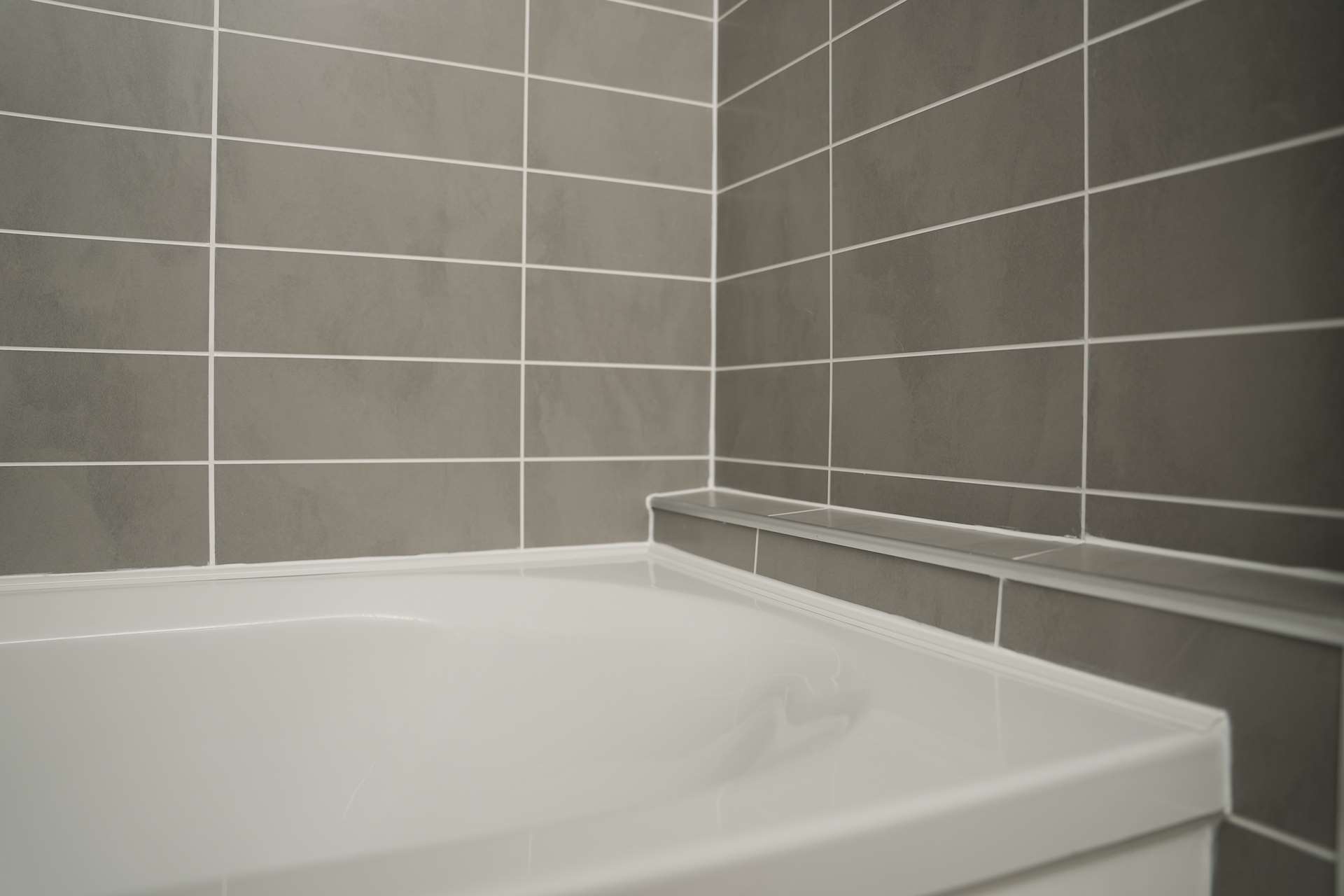
No wall finish can solve these underlying causes. However, once they have been properly addressed, choosing finishes designed for wet environments can form part of a more preventative approach.
We’re already seeing signs of this shift in the market, with local authorities exploring alternatives to traditional tiles as they look for more practical ways to help manage and prevent recurring mould issues in bathrooms. Wall sheet systems are increasingly being considered as part of this approach, offering an easy-to-maintain alternative with fewer joints and no traditional grout lines.
Solutions such as Altro Tegulis and Altro Walls ShowerKit offer an alternative to traditional ceramic tiling, creating easy-to-clean surfaces without traditional grout joints - helping to reduce a common maintenance challenge in wet environments.
There can be practical benefits at installation too. Altro Tegulis is 63% faster to install than ceramic tiles, helping to reduce installation time and disruption for residents. Altro Walls ShowerKit can also be installed over existing ceramic tiles, removing the need for time-consuming tile removal.
For housing providers managing large property portfolios, these efficiencies could make wall sheet systems particularly relevant for planned bathroom refurbishment programmes, where reducing both installation time and recurring maintenance can make a significant difference.
Rather than waiting for problems to occur, landlords could increasingly consider these issues as part of planned bathroom refurbishment programmes.
This becomes even more relevant from November 2026, when Phase 2 of Awaab’s Law extends requirements to additional hazards, including falls and personal hygiene and sanitation.
Alongside the new Decent Homes Standard, due to apply from 2035, the direction is clear: greater emphasis on safe, decent homes and proactive prevention.
For planned maintenance teams, the question may increasingly become:
What can we specify differently today to reduce the need to come back tomorrow?