

Can't see the region you're looking for? You can find a list of our global locations here
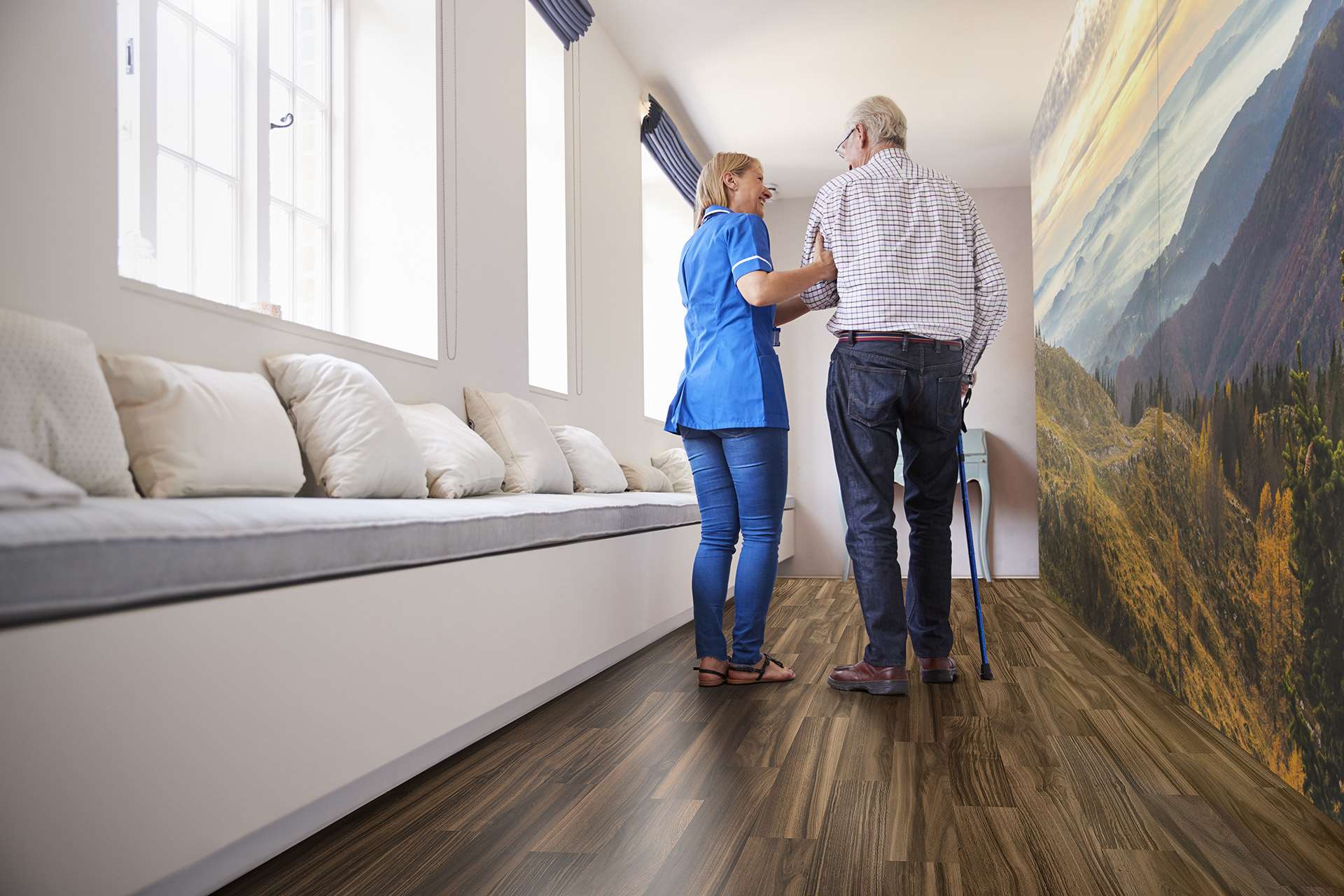
Falls are one of the most serious risks facing older adults. In fact, one in four adults over the age of 65 will fall each year, with many incidents leading to severe injuries like hip fractures.
According to the CDC, 95% of hip fractures in older adults are caused by falling, and 20% of deaths due to injury in this age group are the result of a fall. In senior living environments, where residents often face mobility and vision challenges, thoughtful design can make all the difference.
Here are four key strategies to help reduce the risk of slips and falls.
1. Install safety flooring in bathrooms
The bathroom is one of the most hazardous areas in any living environment, this is especially true for seniors. It's estimated that 80% of falls among all age groups occur in bathrooms, where wet, smooth surfaces increase the risk of slipping.
To mitigate this, choose slip-resistant flooring designed specifically for wet environments. Look for materials that offer:
Complement flooring with additional safety features such as wall-mounted grab bars, fold-down shower seats, and accessible, level-entry showers. By prioritizing bathroom safety, you can significantly reduce the chances of falls and help preserve residents' independence.
2. Remove tripping hazards with seamless design
Transitions between different flooring surfaces can pose major tripping hazards, particularly for residents who use canes, walkers, or wheelchairs. To create a safer environment:
While broader accessibility goals, such as wider doorways or no-step entries can be challenging due to cost or construction constraints, flooring continuity is a manageable and essential step toward safety. With seamless, level flooring you can empower residents to move more confidently and safely throughout the space.
3. Prioritize slip-resistant flooring throughout the facility
The Facility Guidelines Institute (FGI) offers specific flooring recommendations for senior care environments, many of which focus on fall prevention. These include:
Altro’s safety flooring options are designed to meet these standards, offering durable, attractive, and functional solutions tailored to senior living environments.
4. Use contrast and light reflectance to improve visibility
Good visibility isn’t just about brightness; it’s also about contrast. Poor differentiation between surfaces can cause hesitation or missteps. To support better navigation:
Designing with LRV in mind allows for subtle yet effective visual cues that support depth perception and spatial awareness, helping to reduce fall risk.
Creating safer spaces for senior living
Falls are not an inevitable part of aging. They are often preventable with the right design choices. By installing slip-resistant flooring, eliminating tripping hazards, and leveraging contrast and reflectance, senior living communities can enhance safety without compromising aesthetics or comfort. Thoughtful material selection and layout can foster independence, dignity, and peace of mind for both residents and caregivers.


