

Can't see the region you're looking for? You can find a list of our global locations here
Volatile Organic Compounds (VOCs) are found in almost everything. On tables, chairs, flooring, adhesives, even that “new car smell,” virtually everything in the built environment.
Designing school environments is about more than choosing attractive finishes, it’s about safeguarding the health, comfort, and academic potential of students and staff. Among the materials that have a profound impact on indoor air quality (IAQ), flooring plays a crucial role. Prioritizing materials that are tested and proven to emit low VOCs is an effective strategy at reducing the concentration of these pollutants.
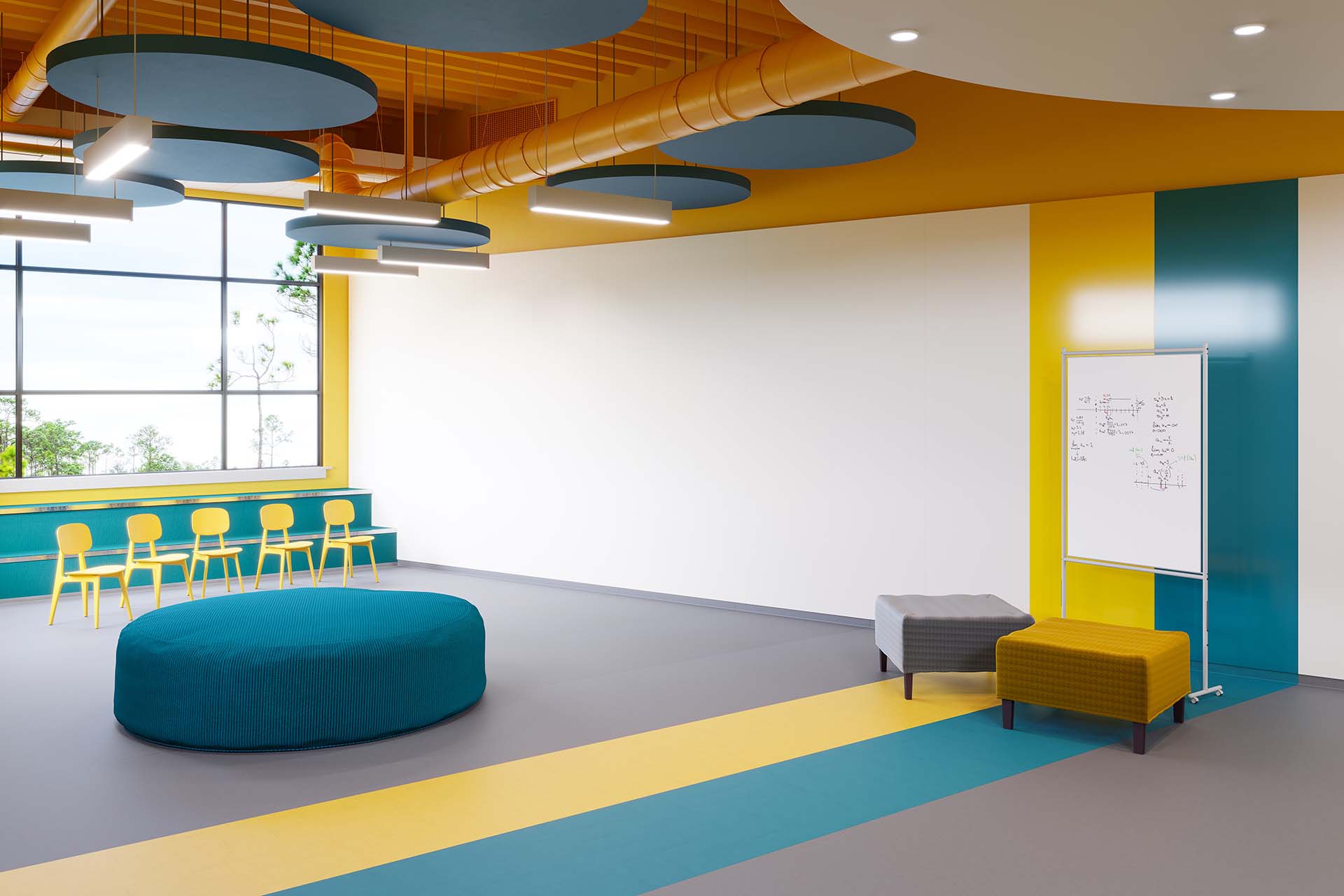
VOCs and school indoor air
VOCs are chemicals commonly released by building materials such as paint, adhesives, furniture, carpet, and resilient flooring. According to EPA data, indoor concentrations of VOCs may be 2 to 5 times, and sometimes as much as over 100 times, higher than outdoor levels. This is partly because of the high concentrations in smaller areas like classrooms and this is why the CDPH test method for VOCs specifically references a classroom scenario.
Children are extremely sensitive to indoor pollutants as they breathe more air per body weight, spend most of the school day indoors, and are still developing physiologically. Even low level VOC exposure can lead to respiratory irritation, increased asthma symptoms, and allergic reactions.
EPA’s Reference Guide for Indoor Air Quality in Schools warns that poor IAQ can contribute to health issues, discomfort, reduced concentration, and lower academic performance, highlighting the need to control pollutant sources like flooring materials.
The role of flooring in indoor air quality
The EPA explicitly identifies flooring as a significant potential source of VOC emissions. These emissions may come not only from the flooring material itself, but also from adhesives, coatings, and maintenance products used on the product over time.
Additionally, certain flooring systems like carpet present indoor air quality challenges if moisture intrusion occurs. Damp carpets can harbor mold, dust mites, and other biological contaminants, further reducing air quality and potentially triggering asthma or allergies.
EPA recommendations: selecting low VOC flooring
The EPA’s Recommended Action Checklists for Improving IAQ in Schools includes clear guidance to help with this problem:
These steps are also embedded in EPA’s broader IAQ Tools for Schools framework, which emphasizes material selection and source control as key technical solutions for maintaining healthy school buildings.
Health + academic benefits
By minimizing VOC emissions, low VOC flooring reduces exposure to respiratory irritants and known asthma triggers. This is especially important for younger children and staff with sensitivities.
Why Altro’s low VOC products stand out
At Altro, our commercial vinyl flooring and wall systems are designed with both well being and performance in mind:
Designing schools that support health, learning and longevity
Every designer, facility manager, or architect has the responsibility to protect occupants. Low VOC flooring is more than a compliance checkbox, it’s a proactive investment in well-being, academic performance, and operational efficiency.
By following EPA guidance, such as specifying low emitting materials, controlling adhesives, ventilating after installation, and embedding material selection into IAQ management planning, designers and school administrators can create safer, healthier, and more sustainable learning environments.
At Altro, we help turn these best practices into reality. From installation through long-term use, our low VOC, high-performance flooring solutions are engineered to support safe, sustainable, and inspiring school spaces.
Download the VOC epidemic in schools whitepaper


