
Can't see the region you're looking for? You can find a list of our global locations here
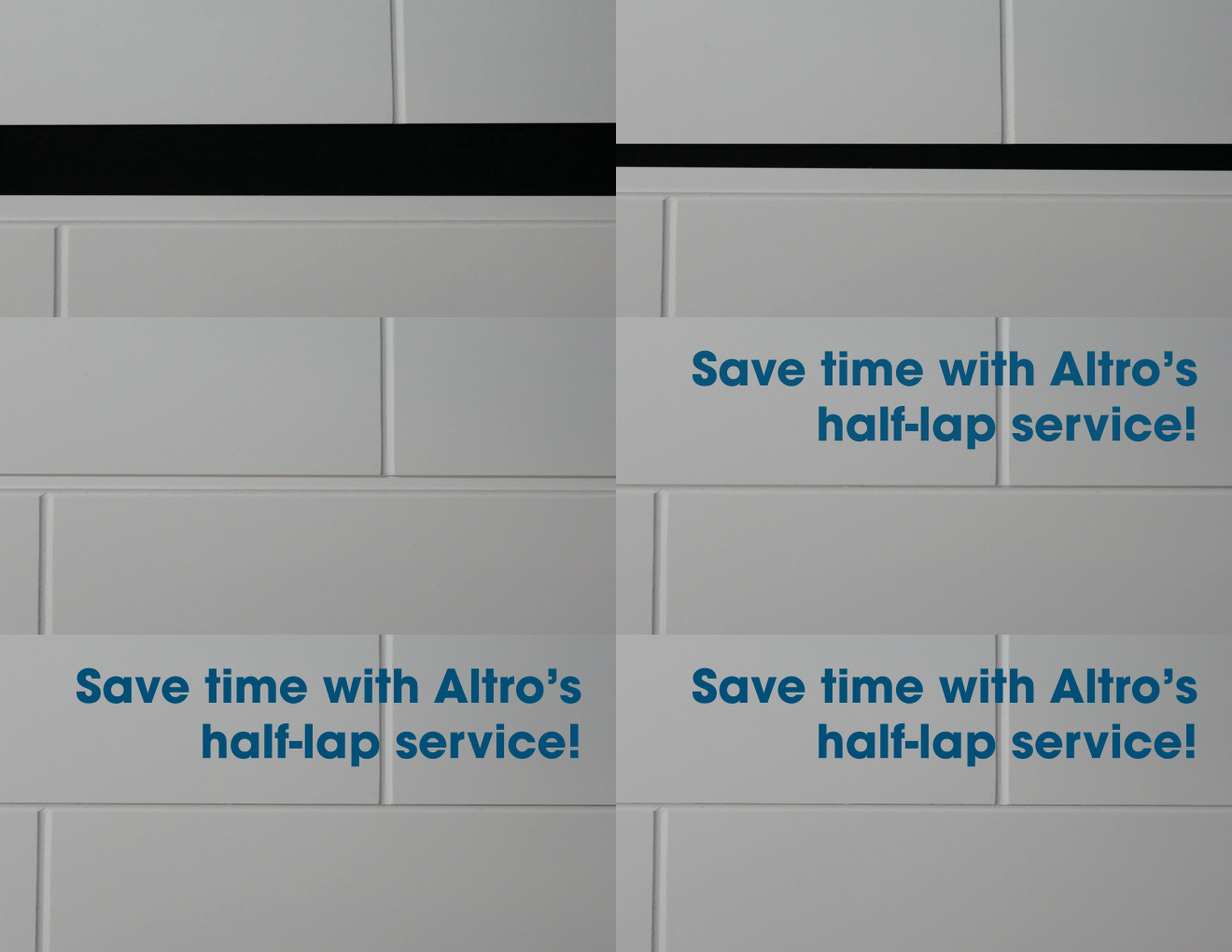
When you walk into a space with wall panels, you might not immediately notice the joints, but they play a huge role in how everything looks and performs over time. Clean lines, easy maintenance, long-term durability... it all comes down to how those panels come together.
That’s where half-lapping comes in.
Fabricated at Altro’s Wilmington, Massachusetts, USA headquarters, half-lapping is a precision routing method that helps panels fit together more seamlessly, while also making life easier for installers.
At its core, half-lapping is about how the edges of each panel are prepared.
Each panel is routed so that when installed, the edges overlap slightly and lock into place. Instead of two panels simply meeting edge-to-edge, they interconnect, creating a smoother, more continuous, water-tight surface.
The result? A joint that’s much less noticeable and far more durable.
Joints can break up the visual flow of a wall, especially when you’re working with patterns, graphics, or carefully designed spaces.
Half-lapping helps minimize that interruption, which makes it a great fit for:
Because the panels arrive pre-routed, a lot of the detailed work is already done before they even get to the job site.
That can mean:
In spaces where hygiene and durability are critical, joints aren’t just about looks. They’re about performance.
When paired with the right adhesives and accessories, half-lapping helps:
Half-lapping doesn’t replace traditional installation methods, it works alongside them.
Installers still have flexibility depending on the needs of the project, which makes it easier to integrate into existing workflows without overcomplicating things.
Want to see the finish up close? Order a sample pack and explore Altro wall systems designed for cleaner joints, easier maintenance, and long-term durability.
Half-lapping is available across a range of Altro wall systems, including:
*Altro Tegulis and Altro Whiterock Digiclad are made to specification and include half-lapping, free-of-charge, as part of the process.
Because half-lapping is done during fabrication, it’s something you’ll want to plan for early.
A typical process looks like:
Timing can vary depending on project size and material availability, so it’s always a good idea to factor in production and shipping when building your schedule.
Half-lapping is one of those small details that ends up making a big impact.
By addressing panel joints before installation even begins, you’re setting the project up for:
And in spaces where both appearance and performance matter, that’s a pretty meaningful advantage.