

Can't see the region you're looking for? You can find a list of our global locations here
“Inclusive” is a word we hear often in education and design. But what does it really mean to create inclusive spaces? True inclusivity goes beyond policies and checklists. It begins with understanding the people who use the space every day.
Chances are, you know, work alongside, and socialize with someone who is neurodivergent, whether it is a family member, a friend, a coworker, or a student.
Understanding neurodiversity
No two people are the same, whether they are neurotypical or neurodivergent. Each individual brings a unique set of skills, talents, and perspectives, along with different access and support needs.
A neurotypical person thinks, perceives, and behaves in ways that are considered the norm by the general population. Schools, workplaces, and public environments are usually designed with neurotypical expectations in mind. This does not mean “normal,” only that the behaviors fall within a set of expected boundaries, which can vary widely across cultures.
A neurodivergent person’s brain functions in a way that differs from these expectations. This could be socially, physically, or verbally. The dictionary definition of neurodiversity is “the range of differences in individual brain function and behavioral traits, regarded as part of normal variation in the human population.” Neurodiversity is a biological fact. All brains are different. The neurodiversity movement advocates for acceptance and inclusion of people with different neurotypes, including autistic people, people with ADHD, dyslexia, or sensory processing differences.
From understanding to design action
Acknowledging the sensory differences experienced by neurodivergent individuals allows designers to create spaces that better support their needs. These differences can involve:
Solutions include calm color palettes, adjustable lighting, and acoustic treatments that help manage sound levels.
The role of color
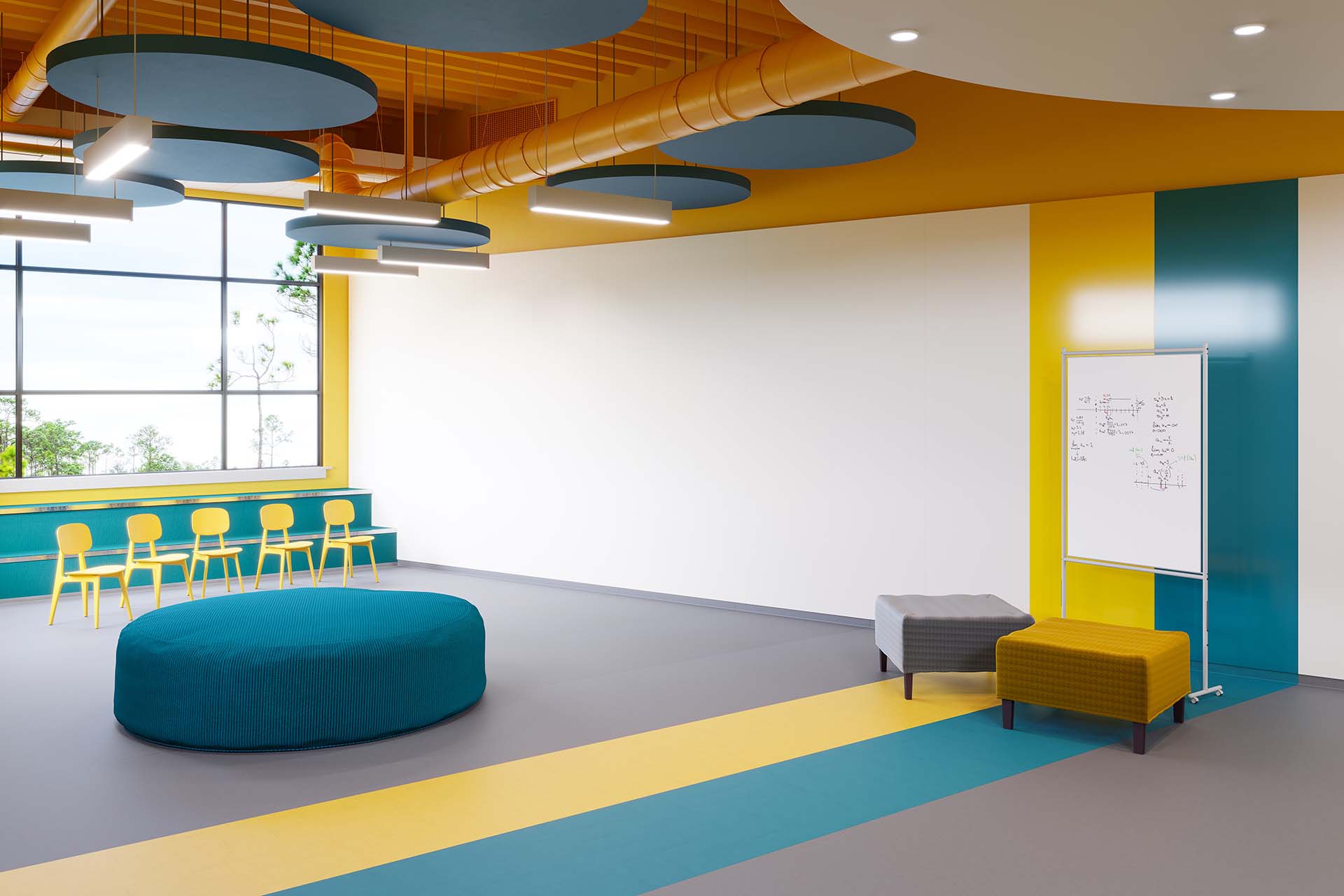
Studies show a direct link between color and mood. The right color can signal a room’s purpose, from relaxation and studying to collaboration and test-taking. Neutral colors such as greys, beige, and cream can work well in spaces for autistic students. They are calming and non-distracting. On the other hand, bright fluorescent colors or heavy patterns can overstimulate or distract. The goal is balance: avoiding sensory overload while keeping spaces engaging.
Following guidance and best practices
International and local guidelines now provide valuable frameworks for neurodiversity-friendly environments. Following these not only supports health and safety but also helps schools meet legal and ethical obligations.
Flooring and wall cladding considerations within Universal Design
Balancing sensory sensitivity with functionality
The aim is not to eliminate all sensory input, but to create balance. Spaces should remain functional and stimulating, with quiet areas or “refuge zones” for those who need them. Clear wayfinding, activity zoning, and thoughtful material selection all contribute to adaptable, inclusive environments.
The Autism ASPECTSS™ Design Index is a globally recognized, evidence-based tool for creating environments that support individuals with Autism Spectrum Disorder. Developed over a decade of research, it includes seven key design criteria:
Designing for neurodiversity is about more than meeting regulations. It is about creating spaces where every student feels seen, supported, and empowered to succeed, in their own way.


